Blog

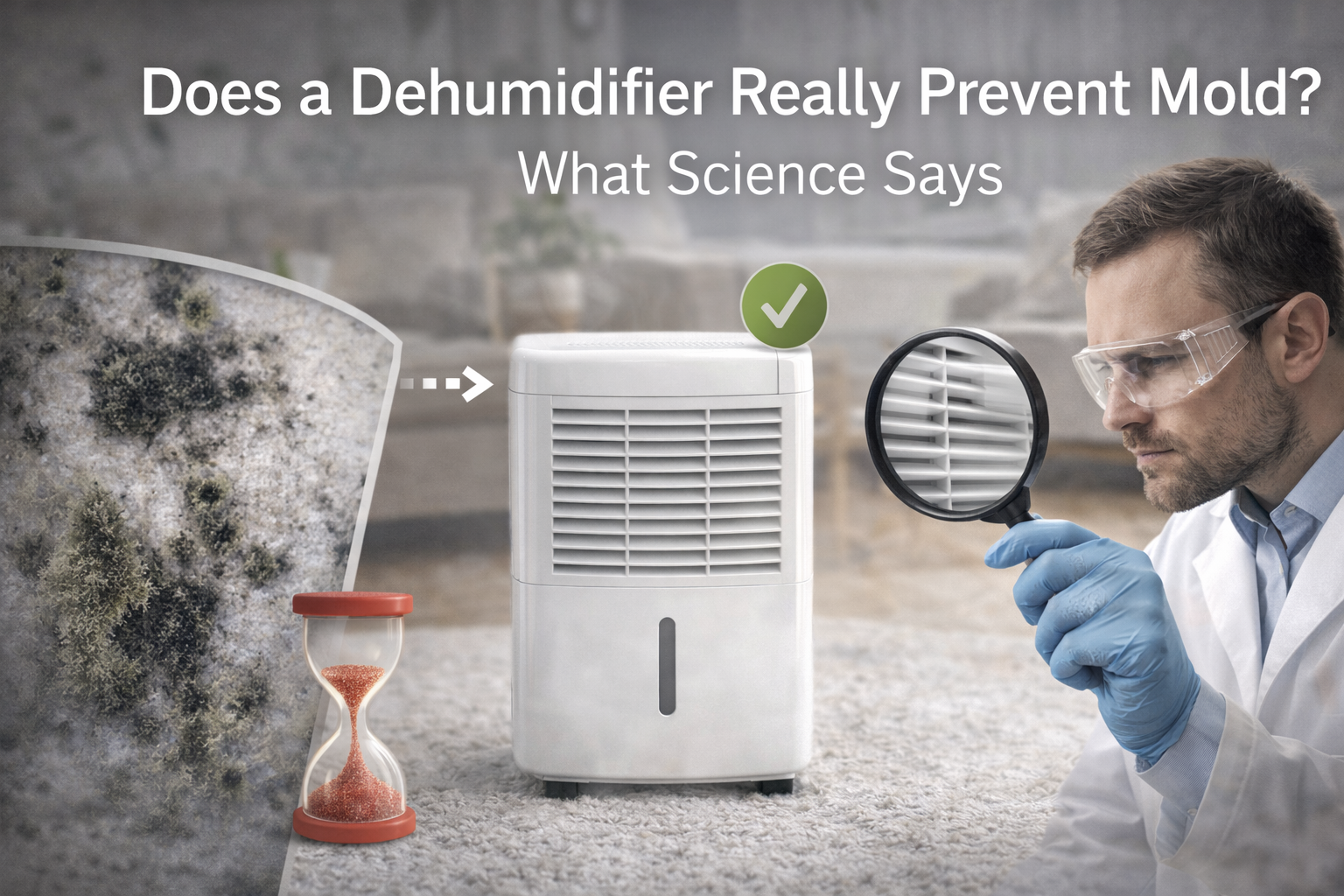
  • Does a Dehumidifier Really Prevent Mold? What Science Says

    Does a Dehumidifier Really Prevent Mold? What Science Says

    Mold growth is one of the most common problems in homes with high humidity.
    Basements, bathrooms, and poorly ventilated rooms are especially vulnerable.

    Many homeowners use dehumidifiers to control moisture, but a common question remains:
    Do dehumidifiers actually prevent mold, or do they only reduce dampness temporarily?

    This article explains how mold develops, the role humidity plays, and what science says about using a dehumidifier for mold prevention.

    Why Mold Thrives in Humid Environments

    Mold spores naturally exist in both outdoor and indoor air.
    They only begin to grow when the right conditions are present.

    High humidity creates the moisture mold needs to survive and spread.
    When indoor relative humidity rises above 60 percent, surfaces such as walls, ceilings, fabrics, and wood can remain damp long enough for mold colonies to form.

    Poor airflow and hidden moisture make the problem worse, especially in enclosed spaces like basements and closets.

    How Dehumidifiers Help Reduce Mold Risk

    A dehumidifier works by pulling excess moisture from the air and collecting it in a water tank or draining it away.

    By lowering indoor humidity levels, a dehumidifier makes the environment less suitable for mold growth.
    Dry air prevents moisture from settling on surfaces and helps rooms dry faster after condensation.

    Most indoor air quality experts recommend keeping relative humidity between 30 and 50 percent to reduce mold risk.

    What a Dehumidifier Can and Cannot Do

    A dehumidifier is an effective preventive tool, but it has limitations.

    A dehumidifier can help prevent new mold from forming by controlling moisture levels.
    It can reduce musty odors, condensation, and damp indoor air.

    However, a dehumidifier cannot remove existing mold or repair water damage.
    Mold already growing on surfaces must be cleaned or professionally treated, and any leaks or structural moisture issues need to be addressed separately.

    Areas Where Dehumidifiers Are Most Effective

    Dehumidifiers are especially useful in areas where moisture builds up easily.

    Basements and crawl spaces often trap humidity due to ground contact and limited airflow.
    Bathrooms without proper ventilation can remain damp long after showers.
    Laundry rooms and homes in humid climates also benefit from consistent moisture control.

    Using a dehumidifier in these areas helps keep humidity at safer levels year-round.

    Signs a Dehumidifier Is Working Properly

    When a dehumidifier is effective, changes are noticeable over time.

    Indoor air feels lighter and more comfortable.
    Condensation on windows and walls becomes less frequent.
    Musty or damp odors gradually fade.
    Humidity readings consistently stay below 50 percent.

    A simple hygrometer can help track humidity levels and confirm whether the dehumidifier is doing its job.

    Final Verdict: Do Dehumidifiers Prevent Mold?

    Dehumidifiers do not eliminate mold that already exists, but they are one of the most effective tools for preventing mold growth in the first place.

    By keeping indoor humidity under control, a dehumidifier reduces the conditions mold needs to develop.
    When combined with proper ventilation and moisture management, it plays an important role in maintaining a healthier indoor environment.

  • How Long Does It Take for a Dehumidifier to Reduce Humidity?

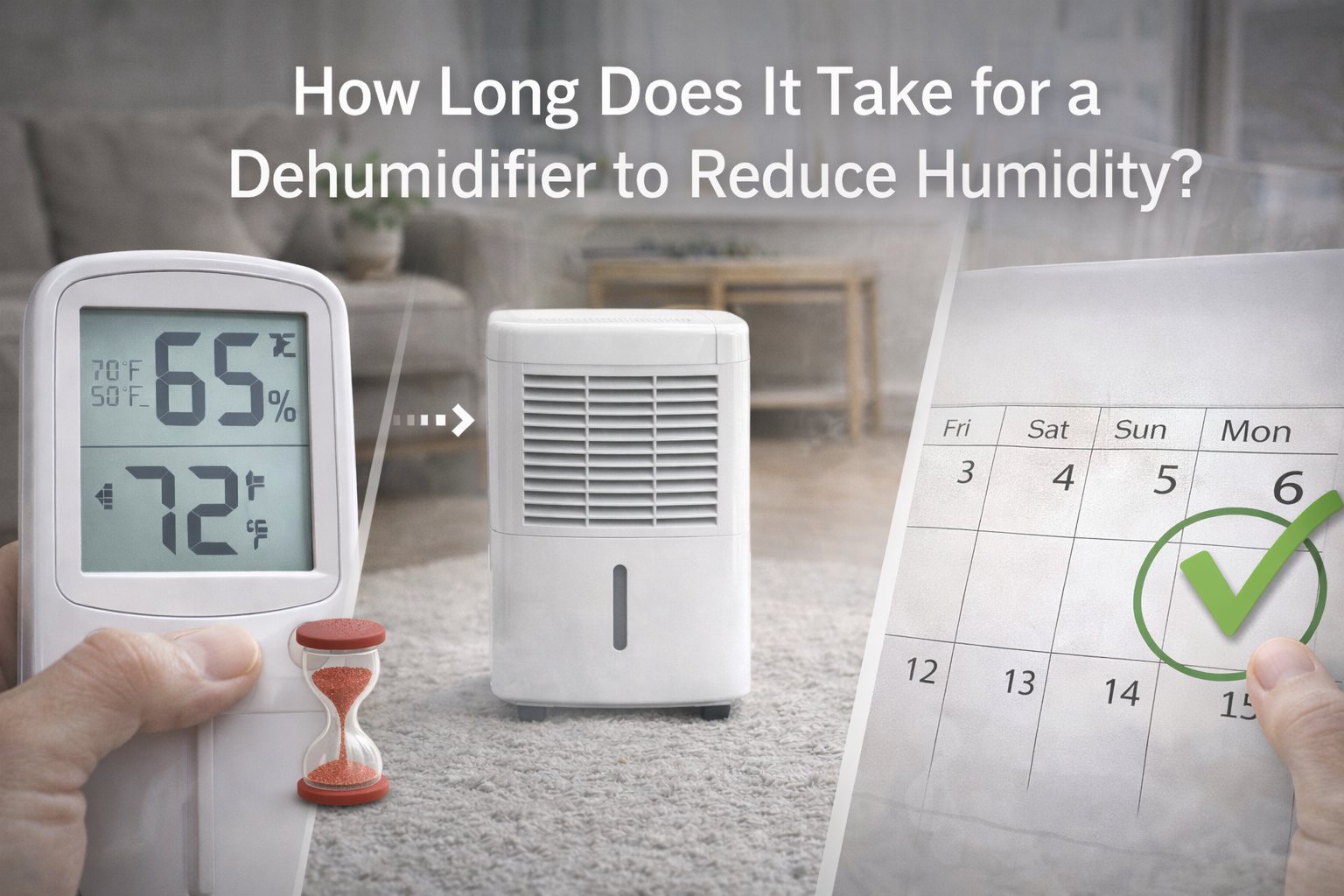
    How Long Does It Take for a Dehumidifier to Reduce Humidity?

    When indoor humidity feels uncomfortable, many people turn to a dehumidifier expecting quick results. But how long does it actually take for a dehumidifier to lower humidity levels in your home? The answer depends on several factors, including room size, starting humidity, and how the space is used. Understanding what to expect can help you set realistic expectations and use your dehumidifier more effectively.

    What Affects How Fast a Dehumidifier Works?

    Not all spaces respond to dehumidification at the same speed. Several variables determine how quickly humidity levels drop.

    Room size plays a major role. Smaller rooms generally see faster results, while large or open-plan areas take longer. Initial humidity level also matters. A room starting at very high humidity will naturally require more time to reach a comfortable range. Air circulation, temperature, insulation quality, and whether doors or windows are open all influence performance as well.

    Average Time to Reduce Humidity in Different Rooms

    In a small room, such as a bathroom or compact office, noticeable changes can happen within a few hours. Bedrooms and standard living spaces usually take anywhere from half a day to a full day to stabilize.

    Basements often require more patience. Because they tend to be cooler, darker, and less ventilated, humidity reduction may take one to three days before reaching a stable level. For whole-home situations, especially in humid climates, consistent use over several days is common before humidity levels settle into a healthy range.

    Why Humidity Sometimes Doesn’t Drop Quickly

    If your dehumidifier seems slow, the issue isn’t always the device itself. Open windows or frequent door use constantly introduce new moisture into the space. Poor airflow can prevent damp air from reaching the unit efficiently.

    In some cases, moisture sources like damp walls, wet laundry, or plumbing issues continuously add humidity, making it harder for levels to fall. These conditions can give the impression that the dehumidifier isn’t working, even when it is.

    How to Speed Up the Dehumidification Process

    You can improve results by keeping doors and windows closed while the unit is running. Placing the dehumidifier where air can circulate freely around it also helps. Running fans can guide moist air toward the unit more effectively.

    Emptying the water tank regularly or ensuring proper drainage allows the dehumidifier to operate continuously without interruption. Consistency is key—running the unit for longer periods often works better than turning it on and off repeatedly.

    When to Expect Stable Indoor Humidity Levels

    For most homes, humidity begins to drop noticeably within the first day. Stable, comfortable levels typically follow after one to three days of consistent use, depending on conditions. Once reached, maintaining those levels becomes much easier than the initial reduction.

    Final Thoughts: Be Patient but Consistent

    A dehumidifier is not an instant fix, but it is a reliable long-term solution for managing indoor humidity. With proper placement and steady operation, most homes see meaningful improvement within a short period. Patience during the first phase pays off, creating a healthier and more comfortable indoor environment over time.

  • Can You Run a Dehumidifier All Day? (Safety, Cost, and Best Practices)

    Can You Run a Dehumidifier All Day? (Safety, Cost, and Best Practices)

    Running a dehumidifier can dramatically improve comfort and help prevent mold, but many homeowners wonder whether it’s safe or practical to leave it running all day.

    This guide explains whether you can run a dehumidifier continuously, how it affects electricity costs, and the best practices for safe and efficient use.

    Is It Safe to Run a Dehumidifier All Day?

    In most cases, yes — modern dehumidifiers are designed to operate for long periods.

    Most units include built-in safety features such as automatic shut-off, overflow protection, and humidity sensors that prevent overuse.

    However, continuous operation should always depend on indoor humidity levels, room size, and proper ventilation.

    When Running a Dehumidifier All Day Makes Sense

    There are situations where extended or continuous use is beneficial.

    Basements with persistent moisture, homes in humid climates, or spaces affected by mold often require longer runtimes to maintain healthy humidity levels.

    If humidity consistently stays above 50%, running a dehumidifier for extended hours can help stabilize the environment.

    When You Should Not Run It Continuously

    Running a dehumidifier all day isn’t always necessary or efficient.

    If indoor humidity drops below 40%, continued operation may dry the air too much and waste electricity.

    Small rooms, well-ventilated spaces, or mild climates usually require only intermittent use rather than 24-hour operation.

    Does Running a Dehumidifier All Day Increase Electricity Costs?

    Yes, but the impact varies.

    Energy usage depends on the unit’s size, efficiency rating, and how hard it needs to work to remove moisture.

    Energy-efficient models with built-in humidistats use less power by cycling on and off as needed instead of running constantly.

    In many cases, controlled use costs less than dealing with mold damage or moisture-related repairs later.

    Best Practices for Running a Dehumidifier Safely

    Using a dehumidifier properly improves performance and extends its lifespan.

    Set the target humidity between 40% and 50%
    Use continuous drainage if possible to avoid frequent tank emptying
    Ensure proper airflow around the unit
    Clean filters regularly to maintain efficiency
    Avoid placing the unit too close to walls or furniture

    These practices help the dehumidifier work efficiently without unnecessary strain.

    How Long Should You Run a Dehumidifier Each Day?

    There is no one-size-fits-all answer.

    Some homes may need only a few hours per day, while others require longer operation during humid seasons.

    The best approach is to monitor indoor humidity with a hygrometer and adjust usage based on real-time conditions.

    Final Thoughts: Continuous Use vs. Smart Use

    Running a dehumidifier all day can be safe and effective when humidity levels are high and conditions require it.

    However, smart usage — guided by humidity readings and proper settings — delivers better comfort, lower energy costs, and longer equipment life.

    Instead of focusing on runtime alone, focus on maintaining a healthy indoor humidity balance.

  • How Long Should You Run a Dehumidifier Each Day?

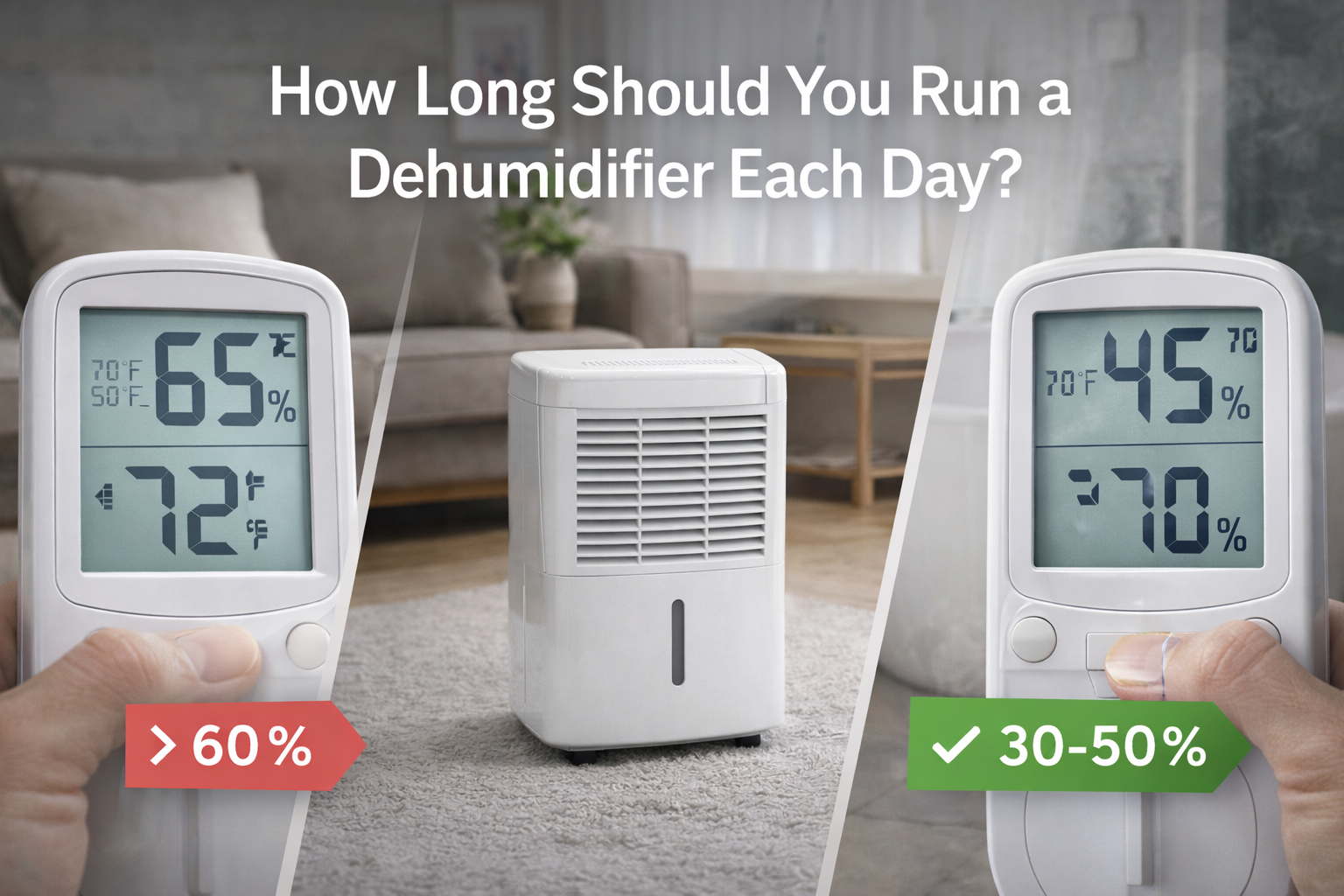
    How Long Should You Run a Dehumidifier Each Day?

    Many homeowners wonder how long a dehumidifier should run each day to effectively control moisture without wasting energy or over-drying the air.
    The answer depends on several factors, including indoor humidity levels, room size, and how moisture enters your home.

    Rather than focusing on a fixed number of hours, the most effective approach is to understand how humidity behaves and adjust runtime accordingly.

    There Is No One-Size-Fits-All Answer

    There is no universal rule for how many hours a dehumidifier should run each day.
    Homes vary widely in size, construction, climate, and ventilation, all of which affect moisture levels.

    Some homes may need continuous dehumidification, while others only require occasional use.
    The key factor is not time, but maintaining a healthy indoor humidity range.

    Recommended Daily Runtime Based on Humidity Levels

    Dehumidifier runtime is best determined by current humidity levels rather than the clock.

    If indoor humidity is consistently above 60 percent, the dehumidifier may need to run for many hours per day, especially during the initial moisture reduction phase.
    Once humidity drops closer to the recommended range, runtime can usually be reduced.

    For homes maintaining humidity between 40 and 50 percent, shorter daily cycles are often sufficient to keep moisture under control.

    Room-by-Room Dehumidifier Usage Guidelines

    Different rooms retain moisture differently, which affects how long a dehumidifier should run.

    Basements typically require longer runtimes due to cooler temperatures and ground-level moisture.
    Bedrooms usually need less dehumidification, especially if ventilation is adequate.
    Living rooms often fall somewhere in between, depending on airflow and occupancy.
    Bathrooms benefit more from proper ventilation, but a dehumidifier may still be helpful if moisture lingers after showers.

    Understanding each room’s moisture behavior helps prevent unnecessary runtime.

    Should You Run a Dehumidifier All Day?

    Running a dehumidifier continuously is not always necessary, but it can be appropriate in certain situations.
    Homes with chronic moisture issues, such as damp basements or poor ventilation, may require extended operation.

    However, once target humidity levels are reached, continuous operation may provide little additional benefit and could increase energy usage.

    Dehumidifiers equipped with humidity sensors automatically adjust runtime, making it easier to maintain balanced conditions.

    Signs You’re Running a Dehumidifier Too Much or Too Little

    Running a dehumidifier too often can make indoor air feel dry and uncomfortable, potentially leading to dry skin or irritation.
    Excessive runtime may also increase electricity costs without improving comfort.

    On the other hand, insufficient runtime may allow condensation, musty odors, or mold-friendly conditions to return.
    Monitoring how your home feels and smells is often the first indicator that adjustments are needed.

    The Best Way to Know When to Stop

    The most reliable way to determine dehumidifier runtime is by tracking indoor humidity levels.
    A hygrometer provides accurate, real-time measurements and helps identify problem areas.

    Once humidity stabilizes within the healthy range, the dehumidifier can run less frequently while still maintaining comfort and protection.

    Final Thoughts on Daily Dehumidifier Runtime

    There is no perfect number of hours that applies to every home.
    Effective moisture control depends on maintaining healthy humidity levels rather than running a dehumidifier for a fixed amount of time.

    By monitoring humidity and adjusting runtime based on actual conditions, homeowners can protect their living space, improve comfort, and avoid unnecessary energy use.

  • Can You Run a Dehumidifier All Day? (Safety, Energy, and Best Practices)

    Can You Run a Dehumidifier All Day? (Safety, Energy, and Best Practices)

    Many homeowners wonder whether it is safe to run a dehumidifier all day, especially in damp environments or areas prone to mold. Concerns about electricity costs, equipment wear, and potential safety risks often come up before deciding how long to keep a unit running.

    This guide explains when running a dehumidifier all day makes sense, when it does not, and how to use it safely and efficiently for long-term indoor comfort.

    Is It Safe to Run a Dehumidifier All Day?

    In most cases, modern dehumidifiers are designed to operate for extended periods without safety issues. Many models include built-in features such as automatic shutoff, humidity sensors, and overheat protection.

    As long as the unit is well-maintained, placed on a stable surface, and used according to the manufacturer’s instructions, continuous operation is generally safe. Problems usually arise not from runtime length, but from improper placement, poor airflow, or lack of maintenance.

    When Running a Dehumidifier All Day Makes Sense

    There are situations where operating a dehumidifier continuously can be beneficial.

    Basements and crawl spaces often stay cool and damp due to their contact with the ground. In these areas, humidity can remain high throughout the day, making longer runtime necessary to prevent moisture buildup.

    Homes with a history of mold or water damage may also benefit from extended dehumidifier use. Continuous operation helps keep humidity levels stable, reducing the conditions that allow mold to grow.

    In very humid climates, outdoor moisture constantly enters the home. Running a dehumidifier for longer periods can help maintain indoor humidity within a healthy range.

    When You Should Not Run a Dehumidifier Continuously

    Running a dehumidifier all day is not always the best choice.

    If indoor humidity levels are already within the recommended range of 30 to 50 percent, continuous operation may overdry the air. This can lead to dry skin, irritated sinuses, and general discomfort.

    In bedrooms, nonstop operation can also be disruptive due to noise and airflow. Many people prefer to use dehumidifiers in sleeping areas only during the day or for limited hours.

    Small or well-ventilated rooms may not require extended runtime. In these spaces, short operating cycles are often enough to maintain balanced humidity.

    Energy Cost Considerations

    Electricity usage is one of the main concerns when running a dehumidifier all day. While modern units are more energy-efficient than older models, longer runtime still increases power consumption.

    Using a dehumidifier without a clear humidity target can lead to unnecessary energy costs. Setting a specific humidity level allows the unit to cycle on and off automatically, reducing electricity use while maintaining comfort.

    Energy-efficient models and proper placement can significantly lower operating costs over time.

    Best Practices for Continuous Dehumidifier Use

    To run a dehumidifier safely and efficiently, a few best practices make a noticeable difference.

    Set a target humidity level rather than running the unit nonstop on a manual setting. This allows the machine to rest once the desired level is reached.

    Ensure adequate airflow around the unit. Avoid placing it directly against walls or furniture, as restricted airflow can reduce efficiency and strain the system.

    Empty the water tank regularly or use a continuous drain option if available. A full tank can cause the unit to shut off unexpectedly or work less effectively.

    Clean filters according to the manufacturer’s recommendations. Dirty filters reduce airflow and increase energy usage.

    Final Thoughts

    Running a dehumidifier all day is not inherently dangerous, but it is not always necessary. The key is understanding your home’s humidity needs and using the device strategically.

    Instead of focusing on how long a dehumidifier runs, it is more effective to focus on maintaining balanced indoor humidity. With proper settings, placement, and maintenance, a dehumidifier can safely support a healthier and more comfortable home environment.

  • How Long Should You Run a Dehumidifier? (Room-by-Room Guide)

    How Long Should You Run a Dehumidifier? (Room-by-Room Guide)

    Running a dehumidifier can dramatically improve indoor comfort, air quality, and moisture control.
    However, many homeowners are unsure how long a dehumidifier should actually run each day.

    Running it too little may allow humidity problems to persist, while running it too long can waste energy and strain the unit.
    This guide explains how long to run a dehumidifier based on room type, humidity levels, and practical home conditions.

    Why Dehumidifier Runtime Matters

    Dehumidifiers work by pulling excess moisture from the air and collecting it in a tank or draining it away.
    The amount of time needed depends on how much moisture is present and how quickly it accumulates.

    Proper runtime helps:
    • Maintain healthy indoor humidity levels
    • Prevent mold and mildew growth
    • Protect walls, furniture, and flooring
    • Improve overall indoor comfort

    There is no single “one-size-fits-all” runtime. The goal is to keep humidity within a healthy range rather than focusing on hours alone.

    Ideal Indoor Humidity Levels to Aim For

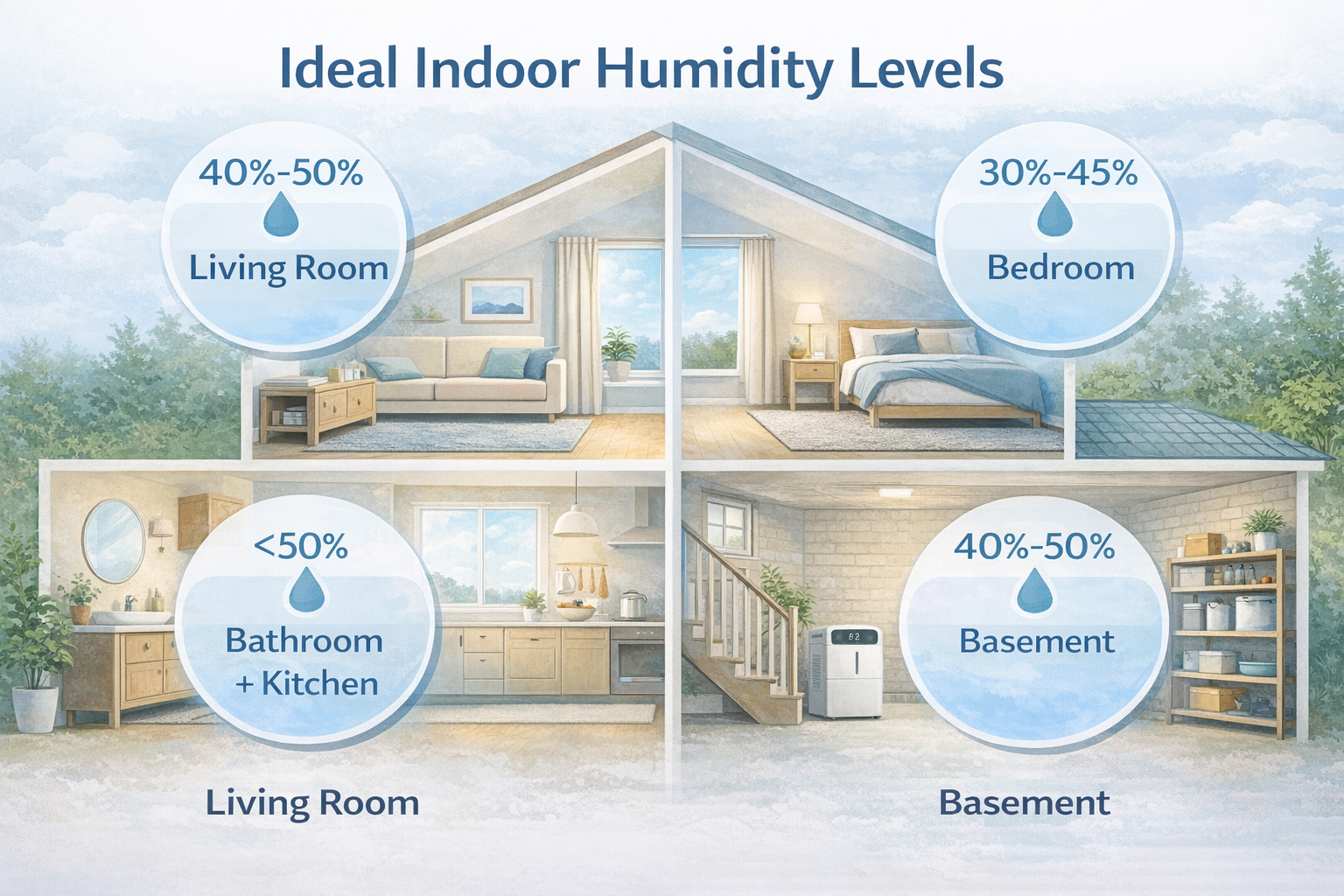
    Most experts agree that indoor humidity should remain between 30% and 50%.

    • Below 30% may cause dry air discomfort
    • Above 50% increases the risk of mold and moisture damage

    A hygrometer is the most accurate way to track humidity and determine whether your dehumidifier is running long enough.

    How Long to Run a Dehumidifier by Room Type

    Different areas of the home require different runtime strategies due to moisture exposure and airflow.

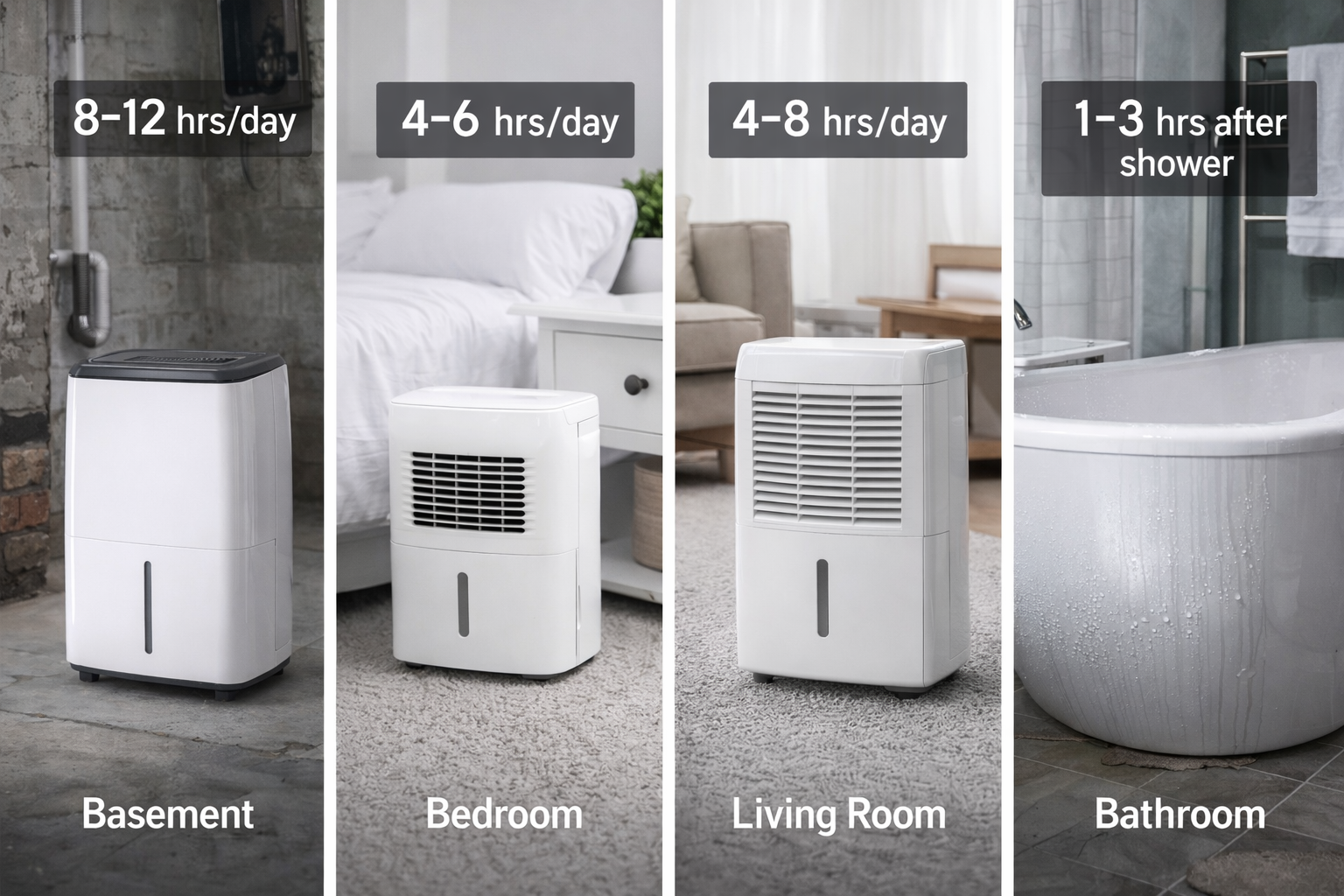
    Basement

    Basements usually need the longest runtime because they are cooler, less ventilated, and closer to ground moisture.

    In many homes, a basement dehumidifier may need to run 8 to 12 hours per day, or even continuously, until humidity stabilizes below 50%.

    Once stable, runtime can often be reduced or automated using a built-in humidity sensor.

    Bedroom

    Bedrooms typically generate moderate moisture from breathing and limited ventilation.

    Running a dehumidifier 4 to 6 hours per day is often sufficient, especially during warmer or more humid seasons.
    Some people prefer running it overnight for comfort and better sleep quality.

    Living Room and Common Areas

    Living rooms usually experience fluctuating humidity depending on occupancy, cooking, and airflow.

    A runtime of 4 to 8 hours per day is common, particularly during humid weather or in open-plan homes.

    Monitoring humidity levels helps prevent unnecessary overuse.

    Bathroom

    Bathrooms experience short bursts of very high humidity from showers and baths.

    Rather than running all day, a dehumidifier should run 1 to 3 hours after showering to remove lingering moisture.
    Proper ventilation is still essential in these spaces.

    Signs You’re Running a Dehumidifier Too Long or Too Short

    The room itself often provides clues about whether runtime is appropriate.

    Signs the dehumidifier is not running enough:
    • Persistent condensation on windows
    • Musty or damp odors
    • Humidity readings consistently above 50%

    Signs the dehumidifier may be running too long:
    • Indoor air feels excessively dry
    • Increased static electricity
    • Higher-than-expected energy bills

    Adjusting runtime gradually is the best way to find the right balance.

    Best Practices for Efficient Dehumidifier Use

    Instead of relying on fixed hours, focus on smart usage habits.

    • Use a hygrometer to guide decisions
    • Set the dehumidifier to turn off automatically at your target humidity
    • Keep doors and windows closed while running
    • Clean filters regularly to maintain efficiency

    Modern dehumidifiers with humidity sensors can greatly simplify this process.

    Final Thoughts: Finding the Right Balance

    A dehumidifier should run long enough to control moisture, not longer than necessary.
    The ideal runtime depends on room type, humidity levels, and seasonal conditions.

    By focusing on humidity targets rather than hours alone, homeowners can maintain healthier indoor air, prevent moisture damage, and use their dehumidifier more efficiently over time.

  • Can High Humidity Damage Furniture and Electronics?

    Can High Humidity Damage Furniture and Electronics?

    Indoor humidity plays a critical role in protecting not only your comfort but also the condition of your belongings.
    When moisture levels remain high for extended periods, furniture and electronics can gradually deteriorate—often without immediate warning signs.

    Many homeowners associate humidity problems with mold or air quality, but its impact on household items can be just as costly.
    Understanding how humidity affects furniture and electronics helps prevent long-term damage and unnecessary replacements.

    How High Humidity Affects Wooden Furniture

    Wood is a natural material that absorbs and releases moisture depending on the surrounding air.
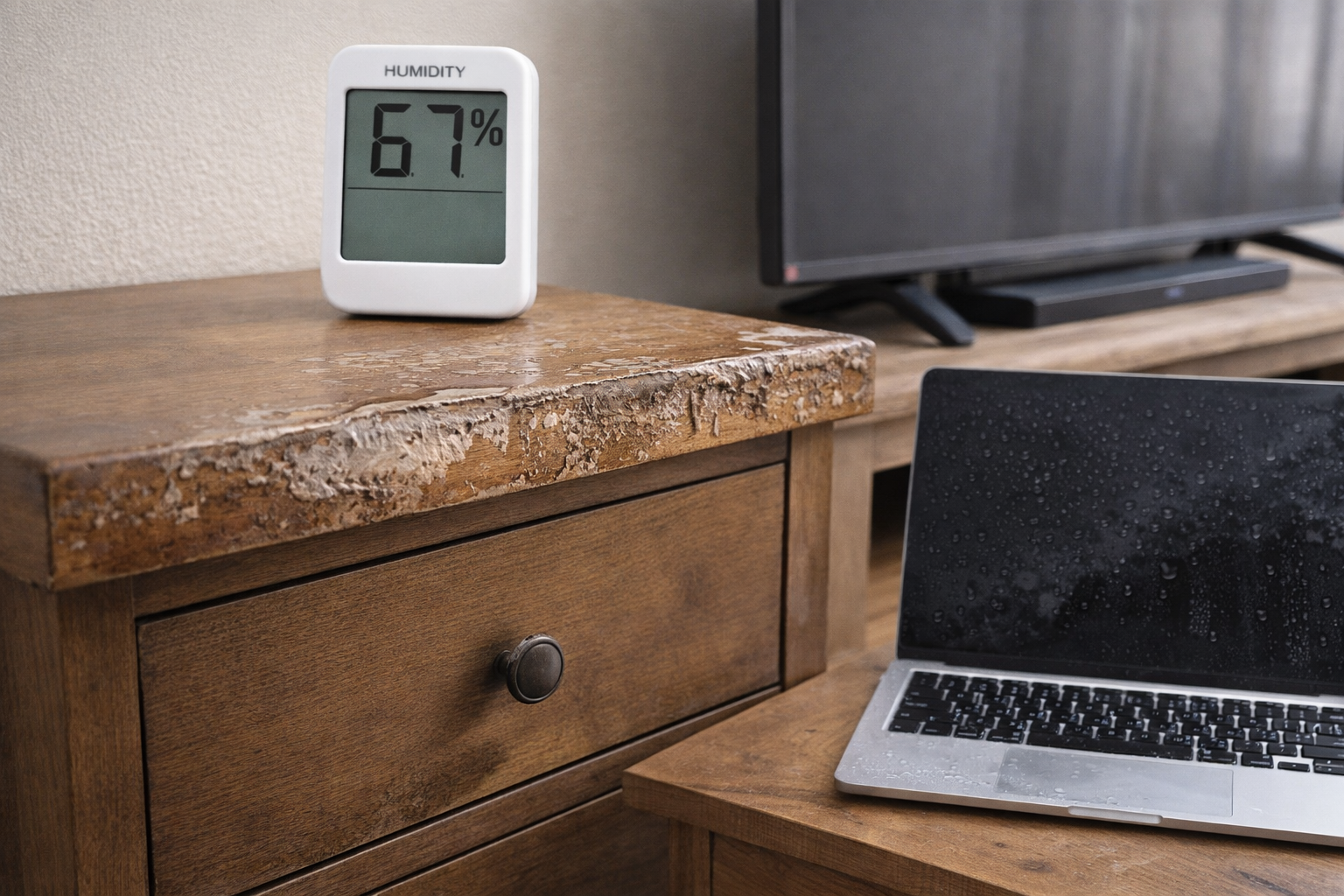
    When indoor humidity stays too high, wooden furniture begins to absorb excess moisture.

    This can cause wood to swell, warp, or lose its original shape.
    Over time, joints may loosen, drawers may stick, and surfaces can develop cracks once the wood dries unevenly.

    Furniture finishes are also vulnerable.
    High moisture can lead to peeling, bubbling, or cloudiness in varnish and protective coatings, reducing both durability and appearance.

    The Impact of Moisture on Electronics and Appliances

    Electronics are highly sensitive to moisture, even when they appear to function normally at first.
    High humidity allows condensation to form inside devices, especially when temperature changes occur.

    Moisture inside electronics can corrode internal components, weaken circuit boards, and shorten product lifespan.
    Appliances such as televisions, computers, gaming consoles, and home office equipment are particularly at risk.

    Repeated exposure to humid air may lead to unexpected malfunctions, reduced performance, or complete device failure over time.

    Signs That Humidity Is Damaging Your Home Items

    Humidity-related damage often develops slowly, making it easy to overlook in the early stages.

    Common warning signs include furniture doors or drawers that no longer close properly, visible warping in wood surfaces, or a persistent musty odor around storage areas.
    For electronics, signs may include intermittent power issues, screen fogging, or unusual operational noises.

    If multiple items across your home show similar changes, indoor humidity levels are likely contributing to the problem.

    What Humidity Level Is Safe for Furniture and Electronics

    Most experts recommend keeping indoor relative humidity between 30% and 50% to protect household items.
    This range helps maintain material stability while preventing excessive dryness or moisture buildup.

    Humidity levels consistently above 50% increase the risk of damage to both furniture and electronics.
    Monitoring indoor humidity allows homeowners to identify problems early and maintain a balanced environment.

    How to Protect Furniture and Electronics from High Humidity

    Preventing humidity-related damage starts with awareness and proper moisture control.
    Improving ventilation in moisture-prone areas such as kitchens, bathrooms, and basements reduces trapped humidity.

    Using a hygrometer helps track humidity levels throughout the home, especially near valuable furniture or electronic setups.
    Maintaining consistent indoor temperatures also reduces condensation risks that affect sensitive devices.

    For long-term protection, managing humidity proactively helps preserve both structural materials and personal belongings.

    Final Thoughts: Why Humidity Control Matters at Home

    High indoor humidity does more than affect comfort—it quietly impacts the longevity of furniture and electronics.
    Without proper control, moisture-related damage can lead to costly repairs or replacements over time.

    By understanding how humidity affects your home and taking steps to keep levels balanced, you protect both your living environment and the items you rely on every day.
    Early attention to humidity makes a lasting difference in home maintenance and overall indoor health.

  • What Size Dehumidifier Do I Need? (Simple Room Size Guide)

    What Size Dehumidifier Do I Need? (Simple Room Size Guide)

    Choosing the right dehumidifier size is one of the most important steps in controlling indoor humidity.
    A unit that’s too small won’t reduce moisture effectively, while an oversized model can waste energy and create uncomfortable conditions.

    This guide explains how dehumidifier size works, what “pints” really mean, and how to choose the right size based on your room and humidity level.

    Why Dehumidifier Size Matters

    Dehumidifiers are designed to remove moisture from the air, but their effectiveness depends heavily on proper sizing.

    If the unit is too small, it will run constantly without lowering humidity enough.
    If the unit is too large, it may cycle on and off frequently, increasing energy use and wear on the machine.

    The right size dehumidifier helps maintain stable humidity, improves comfort, and reduces long-term costs.

    How Dehumidifier Size Is Measured (Pints Explained)

    Dehumidifier capacity is measured in pints, which refers to how much moisture the unit can remove from the air in 24 hours.

    For example, a 30-pint dehumidifier can remove up to 30 pints of water per day under standard conditions.

    In general:
    • Lower pint ratings are designed for smaller, lightly damp areas
    • Higher pint ratings are meant for larger or more humid spaces

    Understanding pint capacity makes it easier to match a dehumidifier to your actual needs.

    Dehumidifier Size Guide by Room Type

    Different rooms require different dehumidifier sizes depending on space, airflow, and moisture sources.

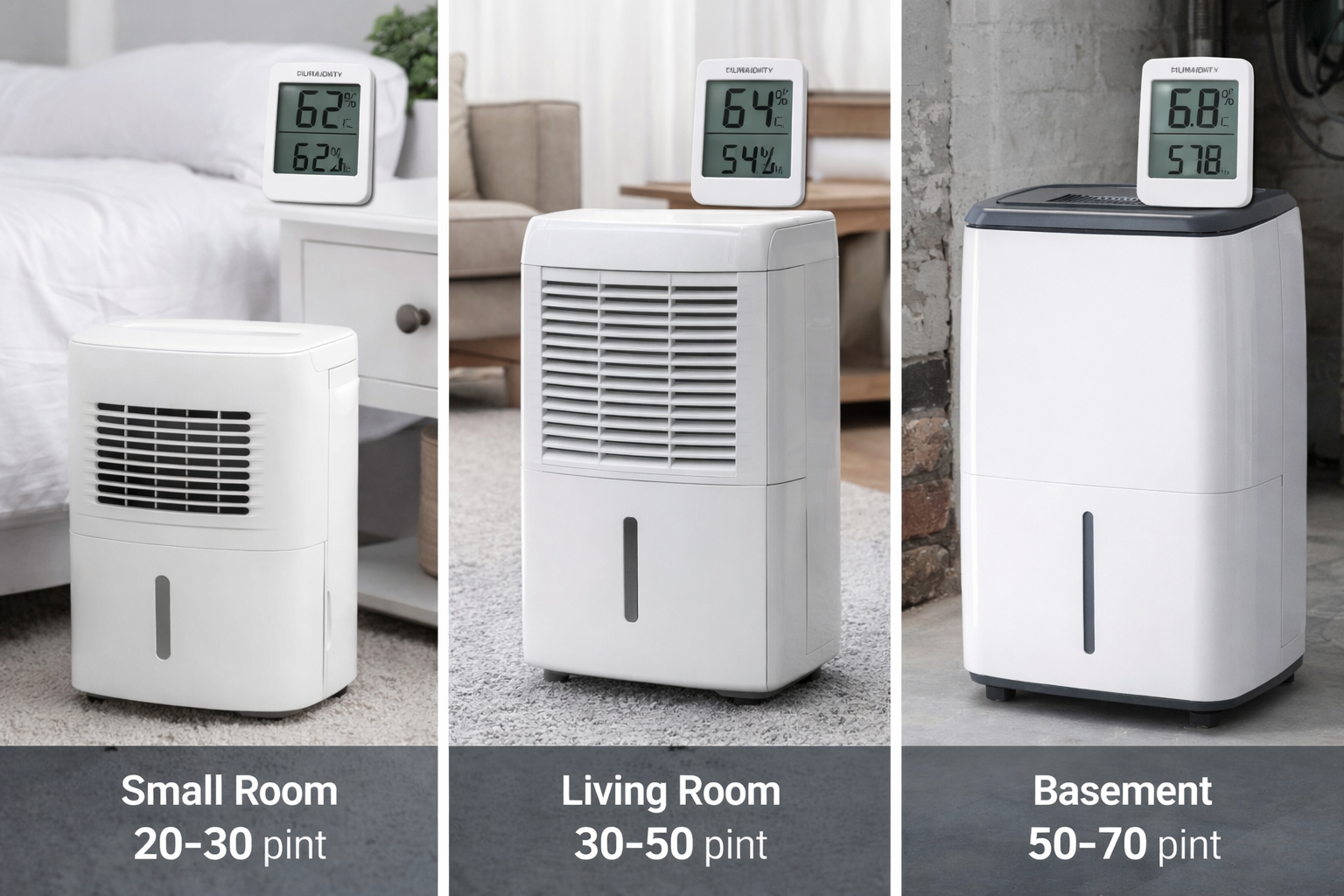
    Small Rooms (Bedrooms, Bathrooms, Home Offices)

    Recommended size: 20–30 pint

    Small rooms trap moisture easily, especially bathrooms and bedrooms with limited ventilation.
    A compact dehumidifier in this range is usually sufficient to control humidity without excessive noise or energy use.

    Living Rooms, Apartments, and Medium Spaces

    Recommended size: 30–50 pint

    Living areas often experience moderate humidity from daily activities like cooking and showering.
    A mid-range dehumidifier provides balanced moisture control while remaining energy efficient.

    Basements and Damp Areas

    Recommended size: 50–70 pint

    Basements are naturally more humid due to cooler temperatures and ground contact.
    Larger-capacity dehumidifiers are typically necessary to prevent mold growth and persistent dampness.

    Other Factors That Affect Dehumidifier Size

    Room size alone doesn’t always tell the full story. Several additional factors can increase or decrease the capacity you need.

    High humidity levels, poor ventilation, frequent water exposure, and signs of mold all indicate a need for a higher-capacity unit.

    Ceiling height also matters. Taller ceilings mean more air volume, which may require a larger dehumidifier even in smaller rooms.

    Common Mistakes When Choosing a Dehumidifier Size

    One common mistake is choosing a dehumidifier based only on square footage without considering humidity severity.

    Another mistake is assuming bigger is always better. Oversized units may short-cycle and fail to maintain consistent humidity.

    Ignoring noise level and energy efficiency can also lead to discomfort, especially in living spaces and bedrooms.

    Final Thoughts: Choosing the Right Size Dehumidifier

    The best dehumidifier is not the largest one, but the one that fits your space and moisture conditions.

    By considering room type, humidity level, and daily usage, you can select a dehumidifier that works efficiently and protects your home long term.

    A properly sized dehumidifier improves comfort, prevents moisture damage, and supports healthier indoor air year-round.

  • How Long Does High Humidity Take to Cause Mold in a Home?

    How Long Does High Humidity Take to Cause Mold in a Home?

    High indoor humidity doesn’t cause visible damage overnight.
    However, when excess moisture lingers inside a home, mold growth can begin much sooner than many homeowners expect.

    Understanding how quickly mold develops in humid conditions helps prevent long-term damage to both indoor air quality and building materials.

    This guide explains how long high humidity takes to cause mold, what conditions speed up the process, and why early control matters.

    How Mold Growth Is Linked to Humidity

    Mold requires three basic conditions to grow:
    moisture, organic material, and time.

    High indoor humidity creates the moisture mold needs to survive and spread.
    When relative humidity consistently stays above healthy levels, surfaces inside the home can remain damp even if they appear dry.

    Once moisture is present, mold spores — which already exist in most indoor environments — can begin to grow.

    How Long Does It Take for Mold to Start Growing?

    In humid environments, mold can begin developing much faster than most people realize.

    Under the right conditions, mold growth may start within 24 to 48 hours.
    This does not always mean visible mold immediately appears, but microscopic growth can begin during this time.

    If humidity remains high for several days or weeks, visible mold spots often follow.

    Humidity Levels That Increase Mold Risk

    Most experts recommend keeping indoor humidity between 30% and 50%.

    Mold risk increases when humidity levels remain above this range.

    • 50%–60%: Increased risk of moisture buildup
    • 60%–70%: Ideal conditions for mold growth
    • Above 70%: High likelihood of mold forming quickly

    Consistently high humidity accelerates the timeline for mold development.

    Areas Where Mold Develops Faster

    Certain areas of the home are more vulnerable to rapid mold growth due to limited airflow and cooler surfaces.

    Basements and crawl spaces
    Bathrooms with poor ventilation
    Laundry rooms
    Behind furniture placed against exterior walls
    Closets and storage areas

    These spaces often trap moisture, allowing mold to develop faster than in well-ventilated rooms.

    Why Mold Often Appears Without Warning

    Mold does not always appear immediately on visible surfaces.

    It frequently begins behind walls, under flooring, inside insulation, or within HVAC systems.
    By the time mold becomes visible, humidity issues may have been present for weeks or months.

    This delayed visibility is why humidity control is critical even when no mold is seen.

    How to Reduce the Risk of Mold from High Humidity

    Preventing mold is easier than removing it once growth begins.

    Improving ventilation in moisture-prone areas
    Monitoring indoor humidity with a hygrometer
    Reducing moisture sources such as leaks or condensation
    Maintaining consistent humidity control year-round

    Addressing humidity early significantly lowers the chance of mold forming.

    Why Early Humidity Control Matters

    The longer high humidity is ignored, the greater the risk of mold-related damage.

    Mold can affect indoor air quality, trigger allergies, and damage walls, flooring, and furniture.
    Early humidity management protects both health and property.

    Final Thoughts

    High humidity does not need months to cause problems.
    In the right conditions, mold can begin developing within days.

    Monitoring humidity levels and addressing moisture early helps prevent mold before it becomes a visible or costly issue.

  • Ideal Indoor Humidity Level: What’s Too High or Too Low?

    Ideal Indoor Humidity Level: What’s Too High or Too Low?

    Indoor humidity plays a critical role in comfort, air quality, and long-term home health.

    Many homeowners focus on temperature but overlook humidity until problems appear. Both high and low humidity levels can cause discomfort, damage, and health concerns.

    Understanding the ideal indoor humidity range helps prevent mold, dryness, and unnecessary energy use.

    What Is the Ideal Indoor Humidity Level?

    Most experts agree that the ideal indoor humidity level falls between 30% and 50%.

    This range supports comfortable living conditions while reducing the risk of mold growth and dry air symptoms. Humidity levels outside this range often lead to indoor air quality issues.

    When Indoor Humidity Is Too High

    Humidity levels consistently above 50% create an environment where moisture-related problems thrive.

    High humidity can encourage mold growth, musty odors, and condensation on windows. It also makes indoor air feel heavy and uncomfortable, especially during warmer months.

    When Indoor Humidity Is Too Low

    Humidity levels below 30% can dry out the air inside your home.

    Low humidity often causes dry skin, irritated eyes, sinus discomfort, and static electricity. It can also damage wood furniture, flooring, and musical instruments over time.

    How Indoor Humidity Changes by Season

    Indoor humidity naturally fluctuates throughout the year.

    Winter heating systems tend to lower humidity levels, while summer conditions often raise them. Homes in humid climates may struggle with excess moisture year-round, especially in basements.

    How to Monitor and Maintain Healthy Humidity Levels

    The easiest way to track indoor humidity is with a simple digital hygrometer.

    Monitoring humidity in different rooms helps identify problem areas early. Addressing humidity issues promptly prevents long-term damage and improves indoor comfort.

    Final Thoughts: Why Humidity Balance Matters

    Maintaining the right indoor humidity level is about balance.

    Keeping humidity within a healthy range improves comfort, protects your home, and supports better indoor air quality. Small adjustments today can prevent costly problems in the future.